

Our editorial team is comprised of skilled technology experts and developers. To ensure that our research is easy to understand in simple and plain English, we may use AI-assisted tools for grammatical refinement and structural smoothness. However, every technical insight, test, and experience displayed has been fully completed and verified by our human team. All content remains the original property of Droid Expose. See more in our Privacy Policy.
Alibaba is preparing to fundamentally change how consumers shop online by integrating its Qwen AI platform directly with its massive Taobao marketplace. According to Reuters, the move aims to shift the e-commerce experience away from traditional keyword searches toward a fully conversational, AI-driven agentic model.
Instead of manually scrolling through endless product listings, users will soon be able to browse, compare, and complete purchases simply by chatting with the Qwen AI agent.
Table of Contents
A Conversational Gateway to 4 Billion Products
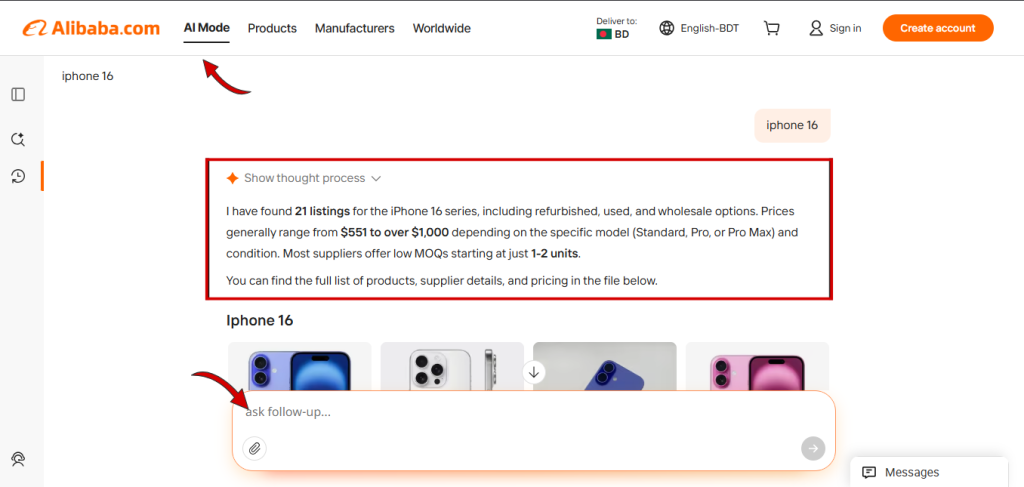
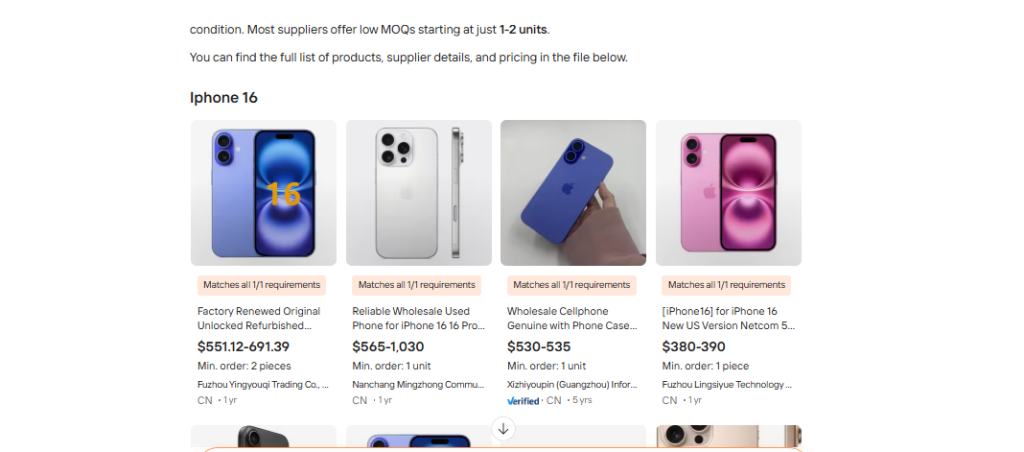
As soon as I opened Alibaba, I noticed a new Google Search–style AI mode in the top-left corner of the homepage. Clicking it launched a conversational chat interface, and when I searched for “iPhone 16,” the AI returned 21 highly organized listings complete with product conditions, specifications, pricing, and minimum order quantities. The experience felt significantly more efficient than Alibaba’s traditional search system. In the past, searching for a specific product often surfaced hundreds of loosely related or completely irrelevant listings, making it difficult for buyers to quickly identify the exact item they needed. Alibaba’s AI-powered search appears to solve that problem by understanding user intent more accurately and narrowing results with far greater precision. The system feels notably smarter at interpreting what customers are actually looking for, delivering cleaner and more relevant product discovery.
The integration will grant the Qwen app access to the entire catalog of over 4 billion products across Taobao and Tmall. To make this work, Alibaba is reportedly backing the AI with a specialized skills library. This allows the AI agent to go beyond just finding products—it will be capable of managing logistics, tracking deliveries, processing refunds, and handling after-sales customer disputes autonomously.
Inside the Taobao app itself, the Qwen-powered assistant will also debut several high-tech tools for shoppers, including:
- Virtual Try-ons: Allowing users to see how products look before buying.
- 30-Day Price Tracking: Automatically monitoring price fluctuations to ensure the best deal.
- Personalized Recommendations: Suggestions tailored to the user’s specific order history and preferences.
The AI Growth Engine
This push into AI-driven commerce highlights a growing divide between Chinese and Western e-commerce strategies. While Western platforms like Amazon and Shopify use AI to refine search or assist external agents, Chinese tech giants are embedding AI directly into the heart of live transactions.
Alibaba has already seen significant traction during early testing phases. During the recent Chinese New Year, the company used AI agents to promote 1-cent milk tea deals, helping to draw in nearly 140 million users to its intelligent agent features by the end of February.
By streamlining the path from discovery to delivery into a single chat interface, Alibaba hopes to capture more user traffic and create a new growth engine in an increasingly competitive domestic market.