

Our editorial team is comprised of skilled technology experts and developers. To ensure that our research is easy to understand in simple and plain English, we may use AI-assisted tools for grammatical refinement and structural smoothness. However, every technical insight, test, and experience displayed has been fully completed and verified by our human team. All content remains the original property of Droid Expose. See more in our Privacy Policy.
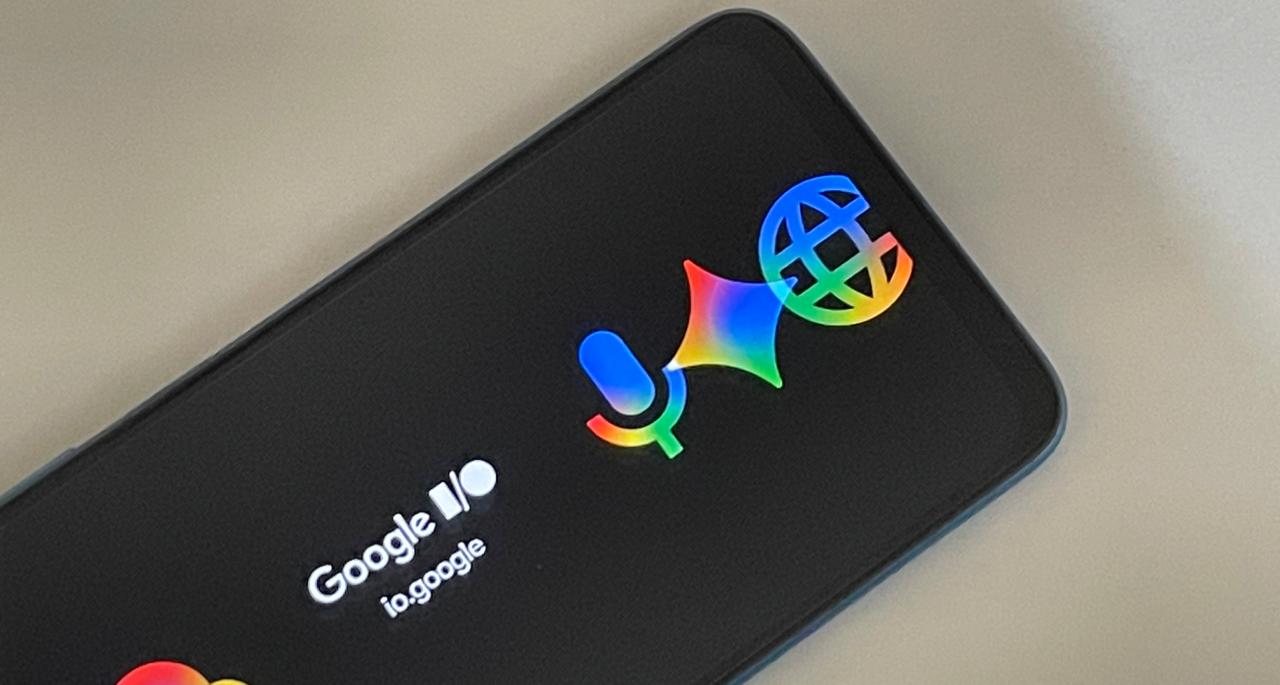
Google held its annual I/O developer conference on May 19, 2026, and if there was one message Sundar Pichai wanted every person in that audience to walk away with, it was this: the age of AI that answers questions is giving way to AI that actually gets things done.
The company called it the agentic Gemini era— a shift from models that respond to prompts toward systems that can plan, act, and keep working even after you close your laptop. It’s a distinction that sounds subtle but has enormous implications for how we interact with software.
Here’s a full breakdown of what was announced.
Table of Contents
The Numbers Google Led With
Before getting into products, Pichai opened with a progress update that set the tone for everything that followed.
Two years ago, Google was processing 9.7 trillion tokens per month across its services. At last year’s I/O, that number had grown to around 480 trillion. This year, Google says it has crossed 3.2 quadrillion tokens per month — a 7x jump year over year. For context, tokens are roughly the units of information Google’s AI models process, and processing more of them means more people solving more problems using AI-powered products.
The developer ecosystem is also growing fast. Over 8.5 million developers are now building apps and experiences using Google’s models each month, and the company’s model APIs are processing roughly 19 billion tokens per minute. Over the past year, more than 375 Google Cloud enterprise customers each processed over one trillion tokens individually.
On the consumer side, the Gemini app has grown from 400 million monthly active users at last year’s I/O to 900 million today — more than doubling in twelve months. Daily requests on the app have grown seven times in the same period.
Gemini 3.5 Flash: The Model That Changes the Math
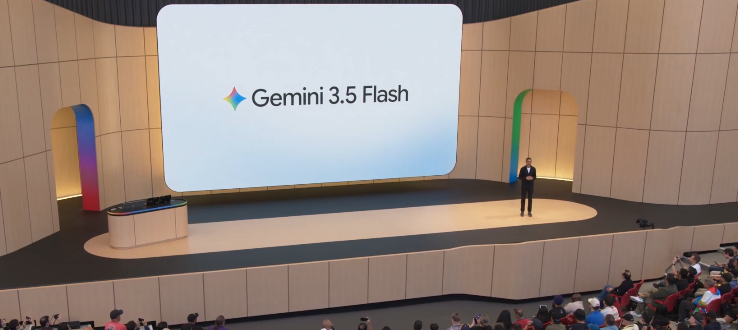
The flagship model announcement was Gemini 3.5 Flash, which Google describes as the first in a new series that combines frontier intelligence with the ability to take action.
Two things stand out. First, compared to the previous Gemini 3.1 Pro, the new Flash model shows improvement across nearly all benchmarks, with a particularly notable jump in GDPVal — a benchmark designed to capture real-world, economically valuable tasks rather than academic tests.
Second, the speed. Google says Gemini 3.5 Flash produces output tokens four times faster than comparable frontier models. Pichai made a point of translating that into dollars: if large enterprises processing about one trillion tokens a day shifted 80% of their workloads from other frontier models to 3.5 Flash, they could collectively save over $1 billion annually.
Gemini 3.5 Flash is available today across Google products and APIs. Gemini 3.5 Pro — which is reportedly showing great improvements in internal testing — is coming next month.
Antigravity 2.0: Google’s Bet on Agentic Development
One of the more developer-focused announcements was Antigravity 2.0, an expanded version of Google’s agent-first development platform.
Where the original Antigravity was primarily a coding environment, the new version is being positioned as a platform for developing and managing groups of autonomous AI agents. It ships as a standalone desktop application that lets developers spin up specialized subagents to tackle complex workflows, with built-in cross-platform terminal sandboxing, credential masking, and hardened Git policies for security.
An even more optimized version of Gemini 3.5 Flash runs inside Antigravity — Google says it’s 12x faster than other frontier models in this context, not the 4x seen in standard API usage.
Google also introduced the Antigravity SDK, which gives developers programmatic control over the agent harness so they can customize and deploy agents on their own infrastructure.
The scale at which Google is using Antigravity internally speaks to how seriously the company takes it. In March, Google was processing half a trillion tokens per day internally using AI developer tools. By the keynote, that number had grown to over three trillion tokens per day — doubling every few weeks.
Gemini Spark: Your 24/7 Personal Agent
The consumer-facing highlight of the keynote was Gemini Spark, introduced as a personal AI agent built into the Gemini app that can handle tasks in the background, on your behalf, around the clock.
Unlike typical AI assistants that respond when you ask them something, Spark is designed to keep working even when you’re not actively using it. It runs on dedicated virtual machines on Google Cloud, which means it doesn’t require you to keep a browser tab open or your phone unlocked.
Spark is powered by Gemini 3.5 and the Antigravity agent harness, which allows it to handle longer, multi-step tasks. It integrates with Google’s own tools out of the box, with third-party tool support through MCP coming in the following weeks. You’ll be able to interact with Spark through the Gemini app, and soon through email and chat as well.
On Android, a new interface called Android Halo — coming later this year — will show live updates and task progress for agents like Spark. Later this summer, Spark will operate directly inside Chrome as an agentic browser companion.
The rollout starts with trusted testers this week. A public beta is coming to Google AI Ultra subscribers in the US next week.
Search Gets Smarter and More Proactive
Google’s search product is also getting a significant upgrade for the agentic era.
Information agents in Search are personalized AI agents you can set up to run in the background, monitoring for what you need and surfacing it at the right moment. Think of them as standing instructions you give Search, rather than one-off queries. These are rolling out this summer, starting with Google AI Pro and Ultra subscribers.
Search is also gaining generative UI capabilities — dynamic layouts and interactive visuals built on the fly, tailored to individual questions. Powered by Gemini 3.5 Flash and Antigravity, these custom experiences will be free for everyone this summer.
For longer-running tasks, Search will be able to build persistent custom dashboards and trackers — Pichai described them as mini apps for your specific tasks. These will start rolling out first to Google AI Pro and Ultra subscribers in the US, in the coming months.
For context on how far Search has already come: AI Overviews now has 2.5 billion monthly active users, and AI Mode — which Google calls its biggest upgrade to Search ever — has already surpassed 1 billion monthly active users in just a year since launch.
Gemini Omni: A New Kind of Model
Google introduced Gemini Omni, a new model capable of generating content in any output modality from any input. The company is starting with video outputs, with image and text generation to follow over time.
Gemini Omni combines Gemini’s language and reasoning capabilities with Google’s generative media models — including Veo for video. Google launched the first model in this family, Gemini Omni Flash, which is available starting today in the Gemini app, Google Flow, and on YouTube Shorts. Developers and enterprise customers will get API access in the coming weeks.
New Consumer Products and Features
Beyond the headline announcements, Google unveiled a range of new features and products:
Ask YouTube reimagines how people find information on the platform. Rather than serving a list of video results, it surfaces the most relevant content and jumps directly to the part of a video that answers your question. Google is beginning to test it now, with a broader US rollout planned for this summer.
Docs Live lets you create Google Docs by speaking out loud instead of typing a prompt. You can verbally brain dump whatever is on your mind and let Gemini structure it into a document. The feature is rolling out for subscribers this summer, and voice capabilities will also come to Gmail and Google Keep at the same time.
Daily Brief is an agent that gives you a morning digest built from your inbox, calendar, and tasks — not just summarizing, but prioritizing information and suggesting next steps. It’s an out-of-the-box agent coming to the Gemini app.
Google Pics is a new AI image creation and editing tool built on Google’s Nano Banana image model. It treats every element in an image as an individual object rather than a flat layer, letting you swap or adjust specific details with precision. It’s in trusted testing now and will roll out to Google AI Pro and Ultra subscribers in Workspace later this summer.
Google Flow is getting a new agent that can plan and reason through complex creative tasks with your inputs. You can also use it to build custom tools through vibe coding — things like video effect designers or hand-drawn animation tools.
Infrastructure: Google Is Spending Big
All of this AI capability requires serious hardware. Pichai revealed that Google’s capital expenditure, which was $31 billion annually in 2022, is expected to reach approximately $180 to $190 billion this year — roughly six times what it was three years ago.
A major part of that investment is going into Google’s custom silicon. The company announced its 8th generation of TPUs at Cloud Next, and Pichai highlighted them again at I/O. For the first time, Google is using a dual-chip approach with separate architectures for training and inference.
The TPU 8t is for large-scale pretraining and delivers nearly three times the raw computing power of the previous generation. Critically, Google’s training infrastructure — powered by JAX and Pathways — can now distribute training across multiple data centers, scaling across more than one million TPUs globally. This makes it possible to train larger models in weeks rather than months.
The TPU 8i is designed for inference and focuses on speed and efficiency. Both chips deliver up to two times better performance-per-watt compared to the previous generation.
SynthID Expands, OpenAI Joins and Our Test
With generative AI producing increasingly convincing content, Google took time to address the transparency side of things. Research shows people can correctly identify high-quality deepfake videos only about a quarter of the time — a number that underscores why watermarking matters.
Google’s SynthID watermarking tool, launched three years ago, has now watermarked over 100 billion images and videos and 60,000 years’ worth of audio assets. Millions of people are using the SynthID detector inside the Gemini app.
Google is now adding Content Credentials verification across products, which will show users whether content originated from a camera or was AI-generated, and whether it was edited using generative AI tools. This is being expanded to Search and Chrome.
On the partner side, OpenAI, Kakao, and Eleven Labs are all adopting SynthID — joining Nvidia, which signed on last year. It’s a meaningful signal of cross-industry collaboration on a problem that affects everyone building with generative AI.’
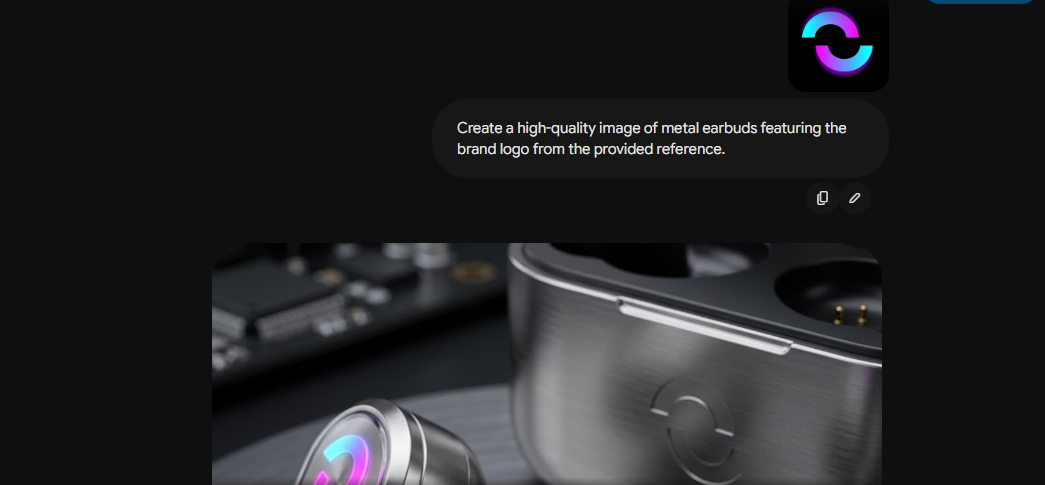
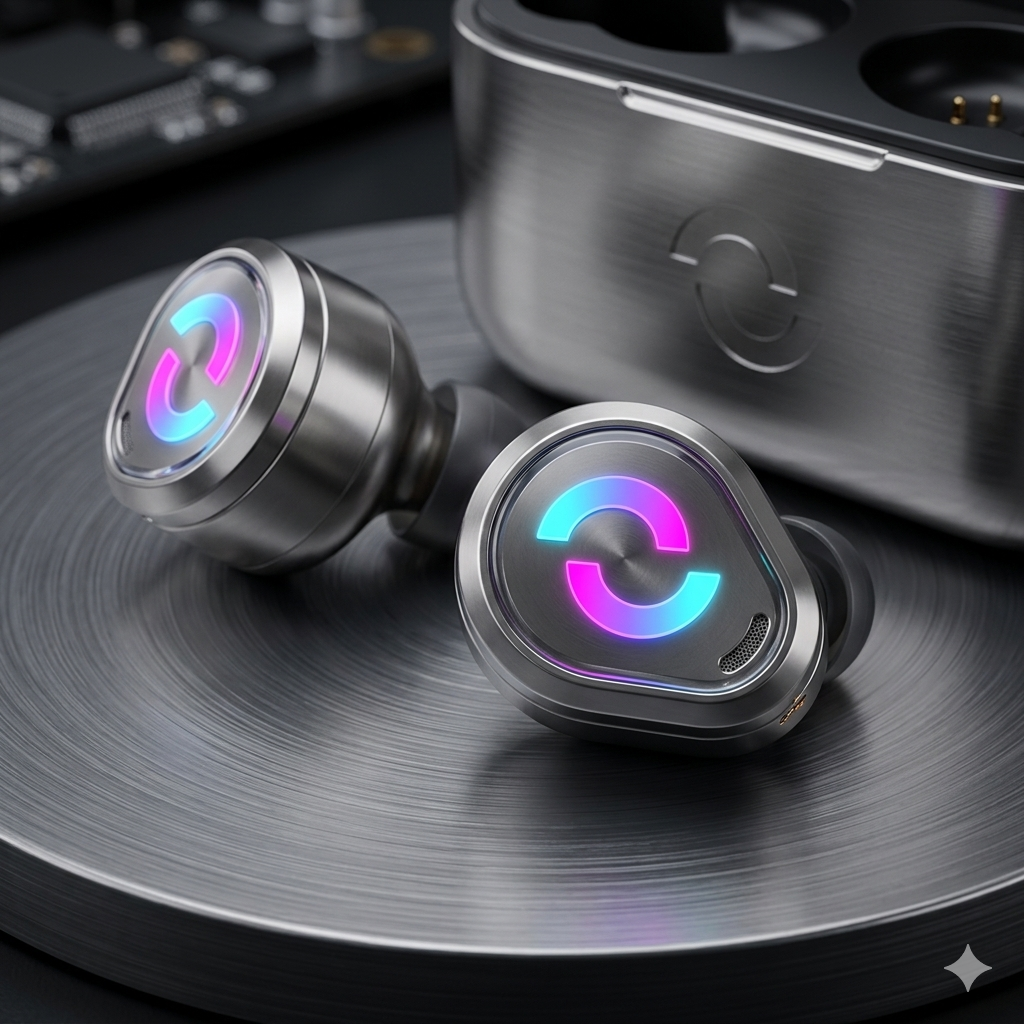
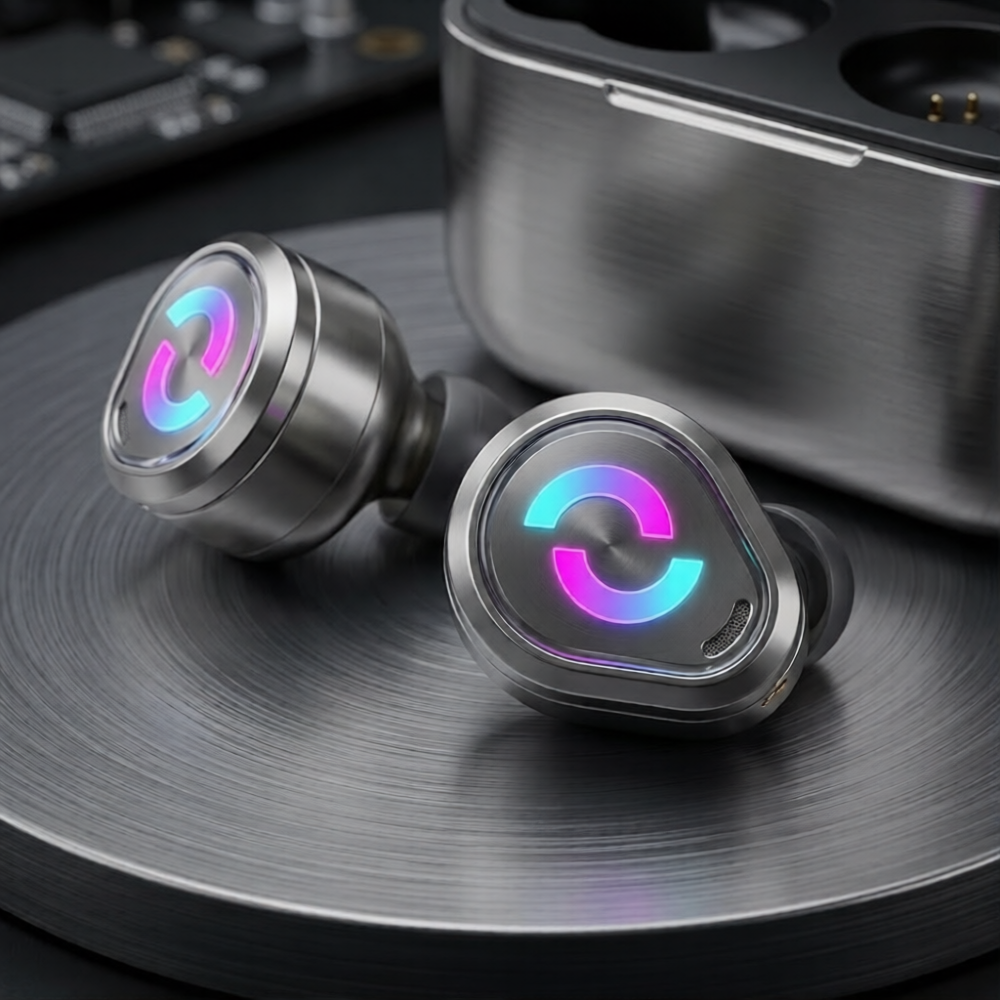
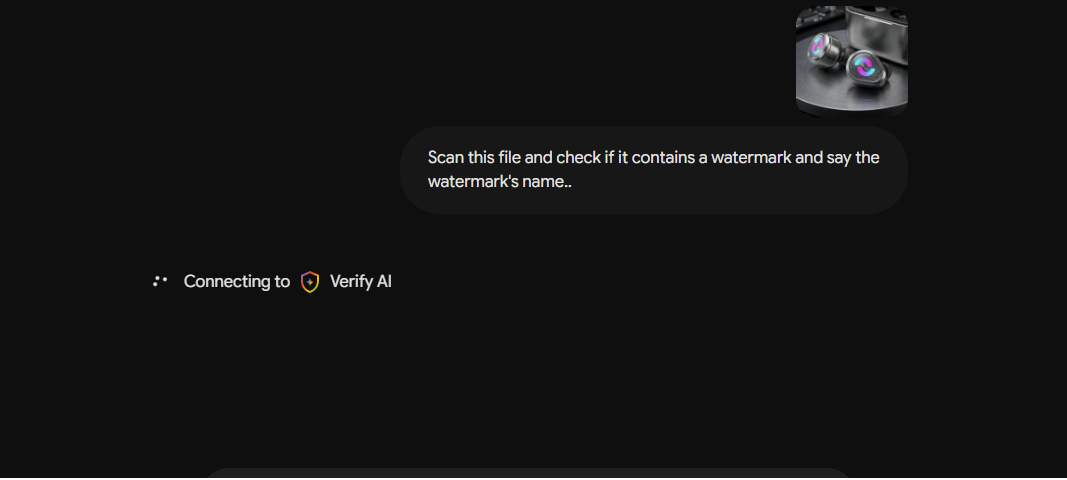
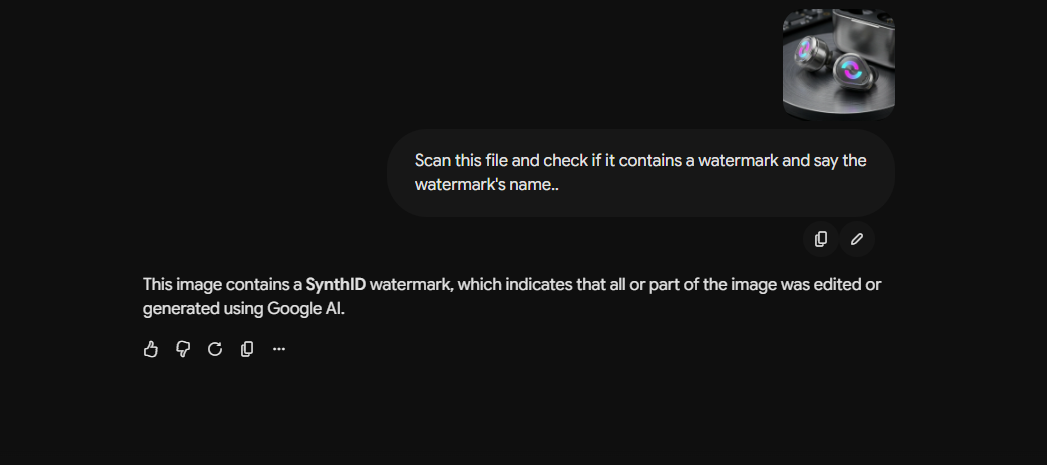
To test it, we generated an image with Google’s Gemini, removed the visible watermark, and even renamed the file before uploading it to another Gemini account. We then asked Gemini whether the image contained any digital watermarking. Within seconds, the AI identified the image as carrying an invisible SynthID watermark and confirmed that it was generated using Google AI.
Developer Tools: Android and the Web
The developer keynote covered several new tools for building Android and web apps.
The stable Android CLI lets AI agents tap into Android Studio’s capabilities directly — handling tasks like downloading the Android SDK and running apps on devices. Google also open-sourced Android skills to help AI models follow best practices for complex workflows like migrating to Jetpack Compose.
Android Bench is a new LLM leaderboard specifically for Android development tasks, now including open-weight models like Gemma 4.
A new migration agent in Android Studio can take an existing app — whether it’s built in React Native, a web framework, or iOS — and migrate it to a native Kotlin Android app. Google says it can turn migrations that previously took weeks into a process that takes hours.
On the web side, WebMCP is a proposed open standard that lets developers expose structured tools to browser-based AI agents, helping those agents execute complex web tasks more reliably. An experimental origin trial starts in Chrome 149.
Modern Web Guidance provides AI coding agents with expert-vetted skills for building more performant, accessible, and secure web experiences, with support for over 100 use cases and integration with the Baseline compatibility standard.
Glasses, Science, and What’s Coming
A few other things worth noting from the keynote:
Google gave more detail on its intelligent eyewear lineup, first teased last year. Two variants are coming: audio glasses that provide spoken assistance in your ear, and display glasses that show information in your field of view. Both work hands-free with Gemini. Audio glasses are launching first, in the fall.
Gemini for Science is a set of tools aimed at accelerating scientific research, combining Gemini’s reasoning and research capabilities with connectors to over 30 major life science databases and tools. Science Skills are available today on GitHub and directly in Antigravity; anyone interested in the experimental features can register on Google Labs.
What stands out about Google I/O 2026 is the coherence of the story Google is telling. The announcements aren’t a collection of disconnected features — they connect into a single narrative about AI that works continuously, acts on your behalf, and gets progressively embedded in every layer of Google’s products.
Whether that translates into something genuinely useful for the average person, or remains polished demo material for a while longer, is a fair question. But the ambition is real, the infrastructure investment is enormous, and Google clearly intends for the agentic era to mean something beyond a keynote tagline.
Gemini 3.5 Flash and Gemini Omni Flash are both available now. Gemini Spark beta begins next week for US Ultra subscribers. The rest of the rollouts are staggered through summer 2026.