


Our editorial team is comprised of skilled technology experts and developers. To ensure that our research is easy to understand in simple and plain English, we may use AI-assisted tools for grammatical refinement and structural smoothness. However, every technical insight, test, and experience displayed has been fully completed and verified by our human team. All content remains the original property of Droid Expose. See more in our Privacy Policy.
Google Glass launched in 2013, sold for $1,500, made people uncomfortable, and was off the market by 2015. That’s the whole story. Google learned from it and spent the better part of a decade watching from the sidelines while Meta quietly turned Ray-Ban smart glasses into a seven-million-unit business.
Now Google is back, and the approach is noticeably different.
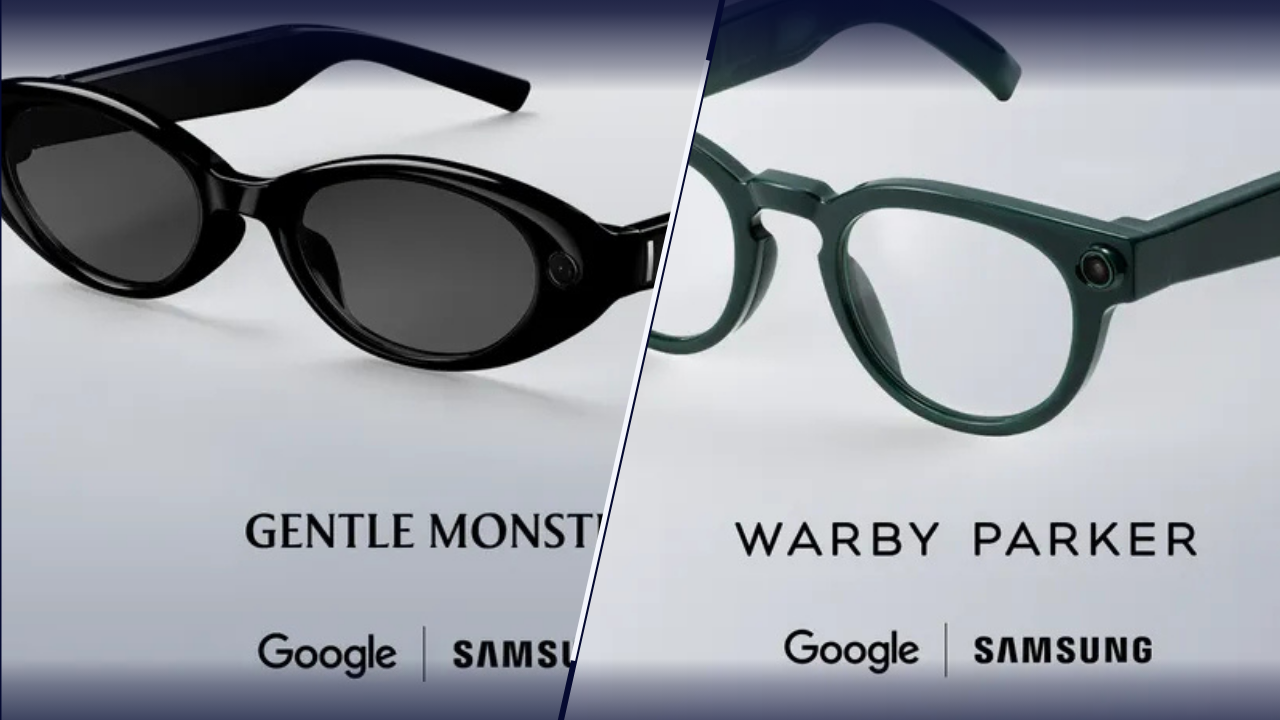
At I/O this week, the company announced intelligent eyewear coming this fall audio glasses, designed with Warby Parker and Gentle Monster, powered by Gemini. No in-lens display yet. No augmented reality. Just a camera, speakers in the arms, and an AI assistant you access by saying “Hey Google” or tapping the frame.
It’s a deliberately modest starting point, and that’s probably the right call.
Table of Contents
Why Audio-Only First
Skipping the display isn’t a limitation Google is hiding it’s the strategy. Audio-only means the glasses can look like regular glasses. Thinner frames, all-day battery life, and nothing that signals “I’m wearing a computer” to everyone around you. That last point matters more than it might seem.
The Warby Parker and Gentle Monster partnerships aren’t just about brand credibility. They’re about putting these in front of customers who buy glasses based on how they look, not what’s inside them. Google is trying to sell eyewear that happens to have Gemini in it, not a gadget you tolerate for the tech.
They also work with both Android and iOS, which is a broader play than Google usually makes with hardware. Locking iPhone users out would cap the ceiling before the product even launches.
What the Glasses Actually Do
Say “Hey Google” or tap the side of the frame and Gemini is ready. The feature set covers a lot of ground without any of it feeling like a stretch.
Navigation is probably the strongest use case day-to-day. The glasses know your location and which direction you’re facing, so directions come through as natural audio rather than robotic GPS instructions. You can ask Gemini to reroute, add a stop, or find somewhere nearby all without taking your phone out.
Translation is similarly well-suited to audio glasses. Real-time translation reads into your ear privately, and Google says it tries to match the tone and cadence of the original speaker, not just the words. Whether that holds up in practice is something we’ll find out when people actually use them in the wild.
Beyond those two, the glasses handle calls, texts, music, and photos the basics you’d expect. There’s also a feature called Nano Banana, which is an intentionally playful name for an AI photo editing tool that works on voice command. “Take a picture and put everyone in funny hats” is the example Google used at the keynote. It’s a light feature, but it signals that Google isn’t positioning these as a serious productivity device. They’re for everyday life.
The speakers are decent for ambient use but won’t replace earbuds. Hands-on testers at I/O noted that at full volume in a loud environment the audio was still hard to follow clearly. That’s fine — the point of frame speakers is to let you hear sound without blocking out the world, not to compete with noise-canceling headphones.
Gemini can also handle multi-step tasks in the background like placing a DoorDash order while your phone stays in your pocket and only asking for your confirmation at the end. That’s the kind of thing that sounds like a demo feature but could genuinely become useful over time.
The Display Glasses Are a Separate Product
Google also showed prototype display glasses at I/O the Android XR version with an in-lens screen that overlays information on your view. These are further out and visibly still in development: large frames, no style options, and image clarity that varied depending on testers’ prescriptions. Google wasn’t pretending otherwise, explaining the prototype is about stress-testing the display technology and understanding battery tradeoffs before committing to a form factor.
The most interesting interaction is navigation. Look ahead to see your next turn. Glance down and a map appears. Look back up and it clears. It’s a clean way to use a display without it sitting in your view constantly.
The live translation demo was also notable- a demonstrator spoke rapid Spanish, the glasses identified the language automatically, showed the English translation in the lens, and Gemini read it aloud simultaneously. That combination of audio and visual feedback is meaningfully better than audio alone.
Google is expanding the trusted tester program for the display glasses later this year. A consumer release before 2027 seems unlikely, but this is clearly further along than a concept.
The Privacy Issue Is Still Unresolved
Any smart glasses with a camera have to answer the same question, and the honest answer right now is that nobody in the industry has fully solved it.
Meta’s Ray-Bans have generated documented cases of people being filmed in public and private spaces without realizing it, with footage later appearing online. The camera indicator light Meta uses is easy to miss. Google’s new glasses will have something similar, but that approach hasn’t settled the debate for Meta, and it won’t for Google either.
What makes this trickier than it was with the original Glass is that these glasses look normal. Glass was visibly a camera, you could see it on someone’s face from across a room. These look like Warby Parker frames because they are Warby Parker frames. That’s good for adoption and harder for bystanders to read.
Google hasn’t laid out a detailed privacy framework yet beyond the standard indicator approach. That’s a gap worth watching, particularly as regulators in several markets are already paying closer attention to wearable cameras after the Meta situation.
What’s Actually Changed Since Glass
The obvious answer is AI, and it’s the right one. Glass could show you information. It couldn’t reason about your environment, handle open-ended requests, or work across multiple steps without you directing every part of it. Gemini changes that gap considerably.
The other thing that’s changed is the market. When Glass launched, smart glasses were a curiosity with no real commercial comparables. Now Meta has proven the category works at scale with a simple formula, and companies like Snap are iterating toward displays. Apple is reportedly working on its own glasses product. Google re-entering now isn’t about being first, it’s about not being late.
This competitive shift is highlighted by recent leaks of Samsung’s upcoming smart glasses, codenamed “Jinju.” Expected to debut later this year, the leaked Jinju frames confirm that the display-less, audio-and-AI-first blueprint is becoming the industry consensus. Strikingly, Samsung is building its hardware on the exact same Android XR platform with deep Gemini integration. But where Google is betting heavily on fashion design partnerships, early reports indicate Samsung is aiming for a distinct hardware edge testing a 12-megapixel Sony camera equipped with autofocus. Because an AI assistant’s contextual awareness relies entirely on what its lens can clearly capture, autofocus could give Samsung a major reliability advantage when reading distant signs or scanning documents. It means Google won’t just be fighting Meta’s massive head start; it will simultaneously be competing on retail shelves with rival hardware running its own software.
The partnership strategy is also more mature. Google Glass was a Google product through and through, which put all the design and distribution weight on a company that makes search engines. Warby Parker and Gentle Monster know how to sell eyewear. That sounds basic but it’s exactly what Glass was missing.
The audio glasses arrive this fall, and they’ll tell us most of what we need to know. Not whether the display version is technically impressive, the I/O prototype already answered that- but whether people actually want to wear AI glasses all day when they don’t have to. If the answer is yes, the display version becomes something worth waiting for. If it’s no, Google will have a lot of explaining to do about what comes next.
The company has been here before. It knows how badly this can go.