

Our editorial team is comprised of skilled technology experts and developers. To ensure that our research is easy to understand in simple and plain English, we may use AI-assisted tools for grammatical refinement and structural smoothness. However, every technical insight, test, and experience displayed has been fully completed and verified by our human team. All content remains the original property of Droid Expose. See more in our Privacy Policy.
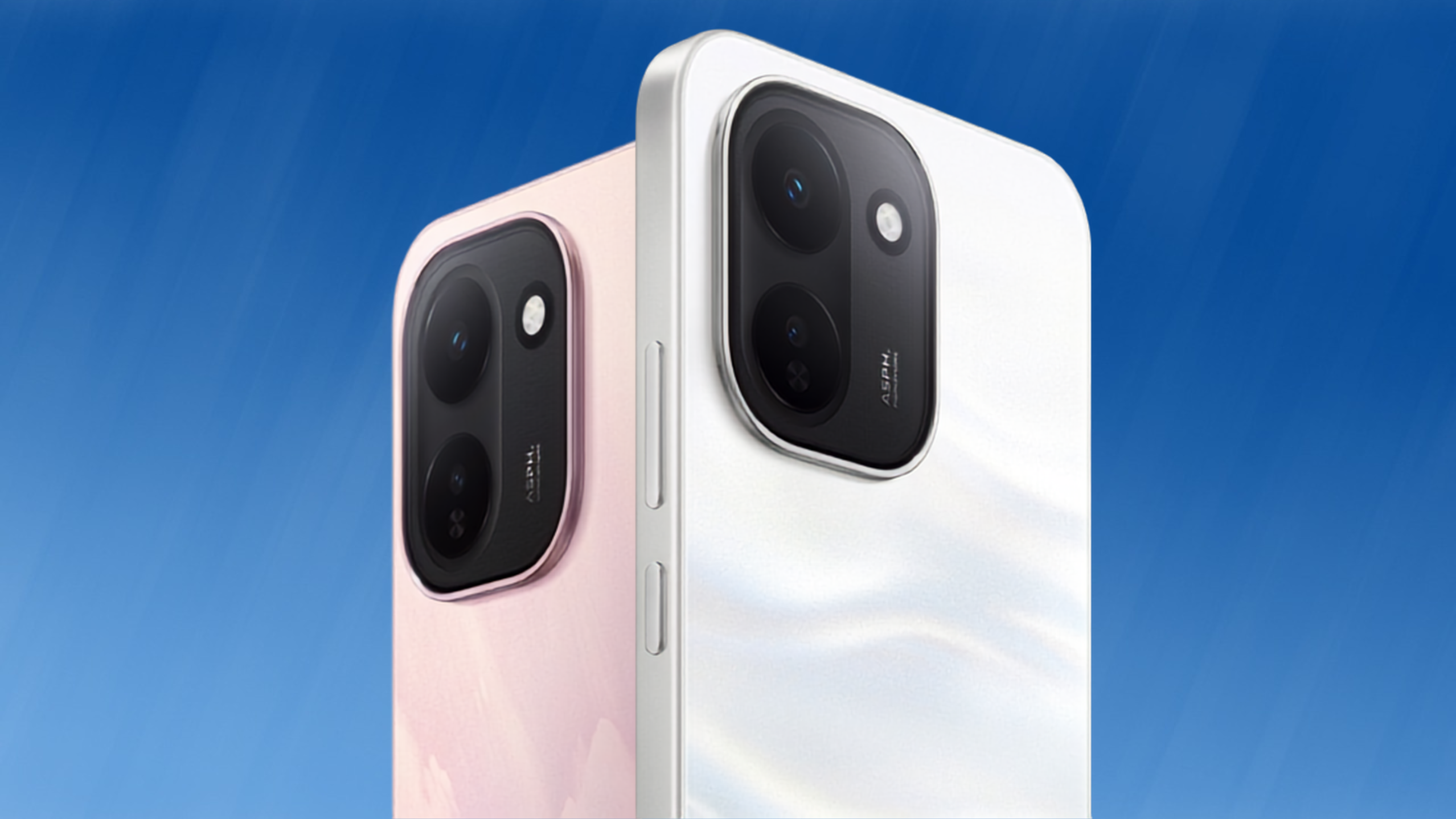
vivo launched the Y600 Turbo in China on May 25, 2026, as the second phone in its Y600 series alongside the Y600 Pro that arrived last month.
The phone carries a 9,020mAh battery with vivo’s own Blue Ocean cell, paired with the Snapdragon 7s Gen 4 chip, a 6.83-inch 1.5K AMOLED display, and 90W wired fast charging. It starts at CNY 2,299 in China and is on sale immediately. There is no confirmed global release.
The Y600 Pro, which vivo announced last month, holds the larger battery of the two at 10,200mAh but uses the Dimensity 7300E chip and steps down to a standard LCD display. The Y600 Turbo goes in a different direction: the battery is smaller at 9,020mAh, but the rest of the hardware is a step up AMOLED display, faster Snapdragon silicon, 90W charging versus the Pro’s slower charging, and a notably thinner body at 8.29mm. The two phones serve different priorities within the same battery-focused range.
Table of Contents
Battery: 9,020mAh Blue Ocean Cell
The battery in the Y600 Turbo is a single-cell 9,020mAh unit that vivo markets under its Blue Ocean Battery branding. According to vivo’s official specifications, the typical capacity is 9,020mAh at 3.72V with a typical energy of 33.56Wh. The rated capacity is slightly lower at 8,820mAh a standard distinction between the peak and guaranteed minimum capacity that most manufacturers acknowledge in fine print but vivo states openly.
The cell is rated to retain at least 80% of its original capacity after 1,200 full charge-discharge cycles. Based on vivo’s lab simulation of 1.8 days per full cycle roughly how long the battery might last per charge in daily use the company equates this to approximately six years of normal use. These are vivo’s own laboratory figures, and real-world results will vary depending on how the phone is used and charged, but the 1,200-cycle threshold at 80% is a measurable benchmark that applies genuine context to the longevity claim.
The phone also operates at temperatures as low as -20°C according to vivo’s testing, which matters for users in cold climates where conventional lithium-ion cells can struggle to deliver consistent capacity.
Charging runs at 90W wired maximum. Vivo specifies that 90W refers to the charger’s maximum output; actual charging power adjusts dynamically based on conditions. There is no wireless charging. The phone includes a direct power supply mode that routes electricity from the charger straight to the system rather than through the battery during use, which reduces heat buildup during simultaneous charging and gaming.
Display: 6.83-inch 1.5K AMOLED, 5,000 Nits Peak
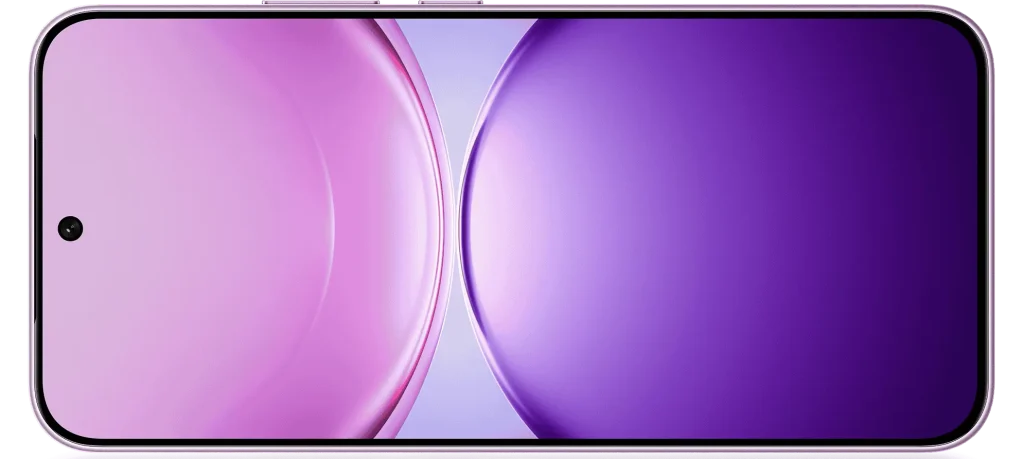
The screen is a 6.83-inch AMOLED panel with a 1.5K resolution, vivo’s term for a 2,388 x 1,080 pixel layout and a 120Hz refresh rate. The aspect ratio produces a tall, narrow display suited to vertical video and long-form scrolling. Peak brightness is rated at 5,000 nits for localised high-brightness areas, which covers small highlights on screen rather than the full panel at once. Full-panel sustained brightness in outdoor use will be lower, as is standard across all smartphones claiming peak figures in this range.
The panel supports 100% DCI-P3 colour coverage, which is the wide colour standard used in professional cinema, and renders 1.07 billion colours. These specs place the display in line with what mid-range AMOLED panels typically offer in 2026.
PWM dimming on the Y600 Turbo runs at 4,320Hz, which is towards the higher end of what current Android phones offer. PWM dimming works by rapidly switching the display backlight on and off to control brightness at low frequencies, some people perceive this as flickering or experience eye strain during extended use. At 4,320Hz the switching happens fast enough that it falls well outside what the human eye can detect. The phone holds both SGS low blue-light and SGS low-flicker certifications. The high-frequency PWM mode activates through developer options for brightness levels below 50 nits; above that, vivo uses a DC-like dimming method.
The panel also includes vivo’s Eye Care Technology suite, covering AI adaptive brightness, fatigue-reduction modes, and an AI sleep mode that adjusts colour temperature for evening use.
Chipset: Snapdragon 7s Gen 4 on TSMC 4nm

The Snapdragon 7s Gen 4 from Qualcomm powers the Y600 Turbo. It is built on TSMC’s 4nm process, which offers improved power efficiency compared to older node sizes relevant on a phone where battery endurance is the central selling point. The chip sits in Qualcomm’s upper-mid-range tier, below the Snapdragon 8 Elite Gen 5 found in flagship devices but a meaningful step above the entry-level options.
Thermal management uses a 7,000mm² vapour chamber that covers 56% of the phone’s internal surface area, according to vivo’s own lab data. The stainless-steel one-piece press-formed VC is designed to spread heat across a wide area rather than concentrating it at the chip, which helps with sustained performance during extended gaming sessions. Vivo states the CPU temperature drops by up to 15°C and the temperature differential between the hot and cool zones of the phone stays within 2°C under load both figures from vivo’s internal testing.
Memory configurations are 8GB or 12GB of LPDDR4X RAM. Vivo also enables a virtual memory expansion feature that allocates up to an equivalent amount of storage space as additional RAM 8GB phones can expand to 16GB total, and 12GB phones to 24GB though this depends on storage space availability and involves slower flash memory rather than true RAM. Storage is 256GB or 512GB of UFS 3.1. There is no microSD card slot.
The phone supports up to 120fps in Honor of Kings according to vivo, with actual frame rates depending on in-game settings, network conditions, and device temperature.
Cameras: 50MP Main, 2MP Depth, 8MP Front
The rear camera setup on the Y600 Turbo is a dual configuration: a 50-megapixel main sensor paired with a 2-megapixel depth-sensing unit used to assist with background blur in portrait mode. There is no dedicated ultrawide or telephoto lens a standard cost-reduction trade-off at this price point. The 2MP depth sensor does not add meaningful photographic capability on its own; its sole function is to feed depth data to the portrait mode algorithm for more accurate background separation.
Portrait mode supports bokeh and continuous autofocus, and both the front and rear cameras support LivePhoto, which captures a short clip around each still photo rather than saving a completely static image. The front camera is 8 megapixels.
Vivo has not published specific sensor names or aperture figures for the Y600 Turbo in its official launch materials beyond the megapixel counts.
Build, Durability and Design
The Y600 Turbo measures 162.8 x 75.1mm and is 8.29mm thick in its lightest form, weighing 215 grams. For a phone housing a 9,020mAh battery, both figures are notable most phones in the 6,000–7,000mAh range at this price tier weigh considerably more and push past 9mm in thickness. The relatively compact dimensions are a direct result of vivo’s Blue Ocean Battery chemistry, which achieves higher energy density than conventional graphite-anode cells and allows a larger capacity in a smaller physical cell.
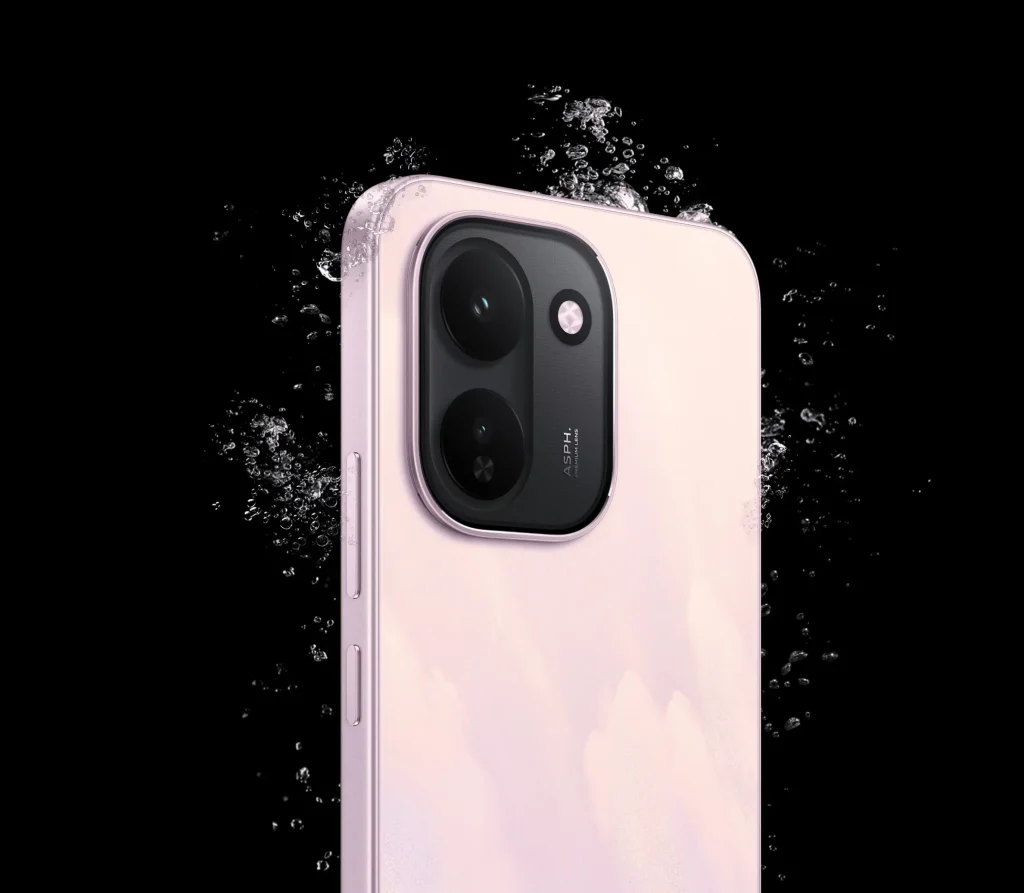
The phone holds dual IP68 and IP69 ratings. IP68 covers submersion in still fresh water up to 1.5 metres for 30 minutes, with the water temperature within 5°C of the phone’s temperature. The IP69 rating covers high-pressure, high-temperature water jets specifically 15 litres per minute at 80°C, applied at four angles. The combination of both ratings is uncommon in this price segment. Vivo notes that water resistance is not permanent and can degrade with normal wear, and that damage from liquid entry is not covered under warranty standard disclaimers across the industry.
Durability testing followed eight military-standard environmental protocols including 1.22-metre drop tests onto steel from all six faces, 12 edges, and 8 corners; a 12-hour sand and dust test at 9m/s wind speed; high-temperature cycling up to 71°C; low-temperature testing at -33°C; and a 96-hour salt spray test. The phone is reported to remain operational after all tests, though vivo notes it is still a precision electronic device that carries drop and impact risk in normal use.
The build uses vivo’s Diamond Rock Shock Absorption Architecture, a tempered glass front panel, a drop-resistant film, and an included drop-resistant case in the box. The flat-panel design with straight edges is consistent across the Y600 series. The three colour options are Dune Gold, Electric Blue, and Millennium Pink.
Connectivity and Software
The Y600 Turbo runs Android 16 with vivo’s OriginOS 6 software layer on top. Connectivity includes 5G, Wi-Fi 6, Bluetooth 5.2, NFC, GPS, and an infrared blaster. The GPS system supports dual-band L1 and L5 frequencies alongside China’s BeiDou navigation system across three bands (B1I, B1C, B2a), which improves positioning accuracy in environments where single-band GPS can lose precision near tall buildings, under tree cover, and in urban canyons.
The NFC implementation supports up to 20 simulated Mifare transit and access cards, bank cards, campus cards, and vivo Pay, along with Bluetooth and digital Type-C wired audio. There is no 3.5mm headphone jack; analogue headphone use requires a separate Type-C to 3.5mm adapter with a built-in DAC.
The in-display fingerprint scanner uses an optical reader rather than the ultrasonic type found in higher-priced phones. Optical scanners are generally less reliable with wet fingers than ultrasonic ones a relevant consideration given the IP69 rating, as the phone is rated for high-pressure water contact while the biometric unlock may be less reliable immediately afterward.
OriginOS 6 includes a dedicated outdoor Professional Mode 2.0 feature aimed at delivery riders and field workers: it automatically activates when certain delivery or ride-hailing apps are open, defaults the phone to speakerphone with background noise filtering for hands-free calls, and maintains stable screen brightness for outdoor visibility. A simplified interface mode (“Easy Mode 2.0”) targets older users with enlarged text, one-tap access to common functions, and a remote assistance feature that lets a family member view and control the screen.
Pricing and Availability
The vivo Y600 Turbo went on sale in China on May 25, 2026. Three configurations are available.
| Configuration | CNY Price | Approx. USD |
|---|---|---|
| 8GB RAM + 256GB | 2,299 | ~$340 |
| 12GB RAM + 256GB | 2,599 | ~$380 |
| 12GB RAM + 512GB | 2,899 | ~$425 |
No global launch has been announced. vivo’s Y series phones do reach select markets outside China, but availability varies significantly by region and there is no indication of a confirmed international rollout for the Y600 Turbo at the time of writing.
The Y600 Turbo makes sense for buyers in the CNY 2,300–2,900 range who use their phone heavily throughout the day and want to go significantly longer between charges than standard mid-range phones allow. The 9,020mAh cell on the Blue Ocean chemistry in an 8.29mm, 215-gram chassis is the specific reason to choose this phone over alternatives at a similar price. The AMOLED display with high-frequency PWM dimming is a practical inclusion for users who spend long periods looking at their screen. The IP68/IP69 dual rating and military-standard durability testing cover users who work outdoors or in environments where the phone might encounter water, dust, or drops.
The camera system is the phone’s clearest limitation. A 50MP main sensor backed only by a 2MP depth unit gives you portraits with software bokeh and standard wide shots, there is no ultrawide for group photos or tight spaces, and no telephoto for distance subjects. Anyone who photographs frequently and across varied conditions will find the camera range restrictive. The optical in-display fingerprint sensor is also a step down from ultrasonic alternatives at a time when ultrasonic readers are appearing in phones at comparable price points.